





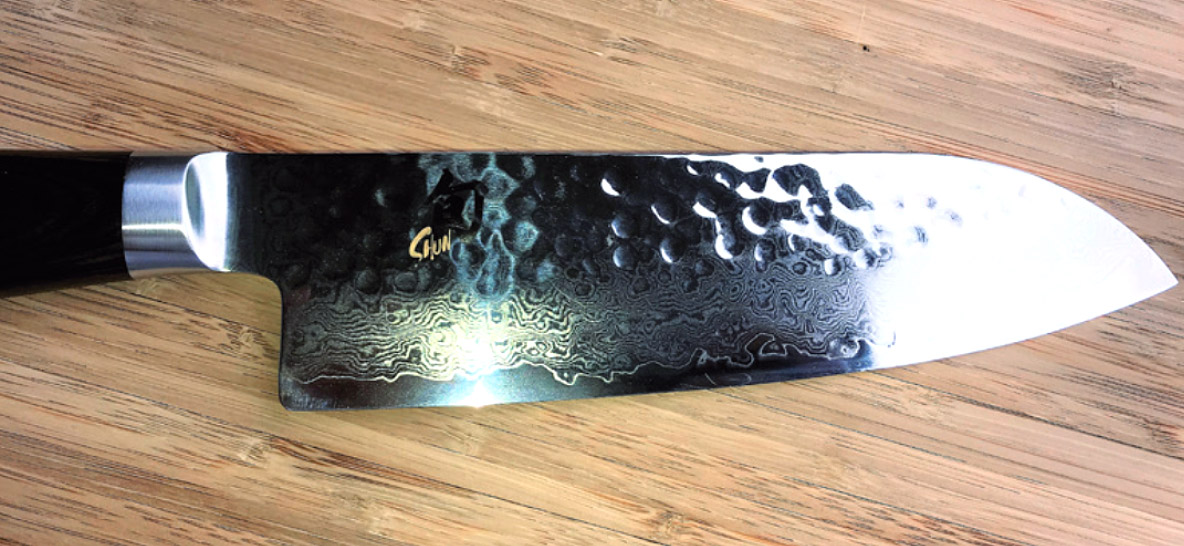
Originating in the Bronze Age, heat treatment was further developed to process iron (blacksmithing) around 800 B.C., reaching a first peak with the production of Damascus steel in the beginning of the 10th century A.D. .
Iron was converted into steel by adding carbon, thus giving the alloy new properties like increased hardness. A large number of iron alloys and various elements have been investigated resulting in the development of new steel types suitable for many different applications. Another way to change the properties of steel is heat treatment, like annealing. As time plays a crucial role in this process, temperature-time diagrams have been developed. Today, many temperature-time diagrams have been evaluated to manufacture the best steel for a specific application. These diagrams show the correlation between time and heat and the respective structure (austenite, martensite, bainite) of the treated steel. Heat treatment is primarily performed in hardening shops. The materials treated in hardening plants are mostly the same and reproducible, reliable, and comparable results are mandatory. For effective process control a large number of samples has to be tested. Due to this high throughput, the sample preparation process should be simple and fast. Moreover, the preparation must result in excellent sample flatness to ensure easy and error-free surface inspection.
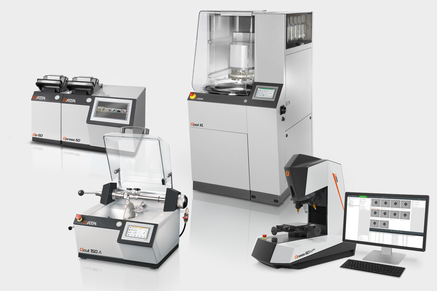
QATM ofrece productos para todas las aplicaciones de materialografía
Materialographic Preparation Process
As a consequence of all these requirements, the preparation method should include:
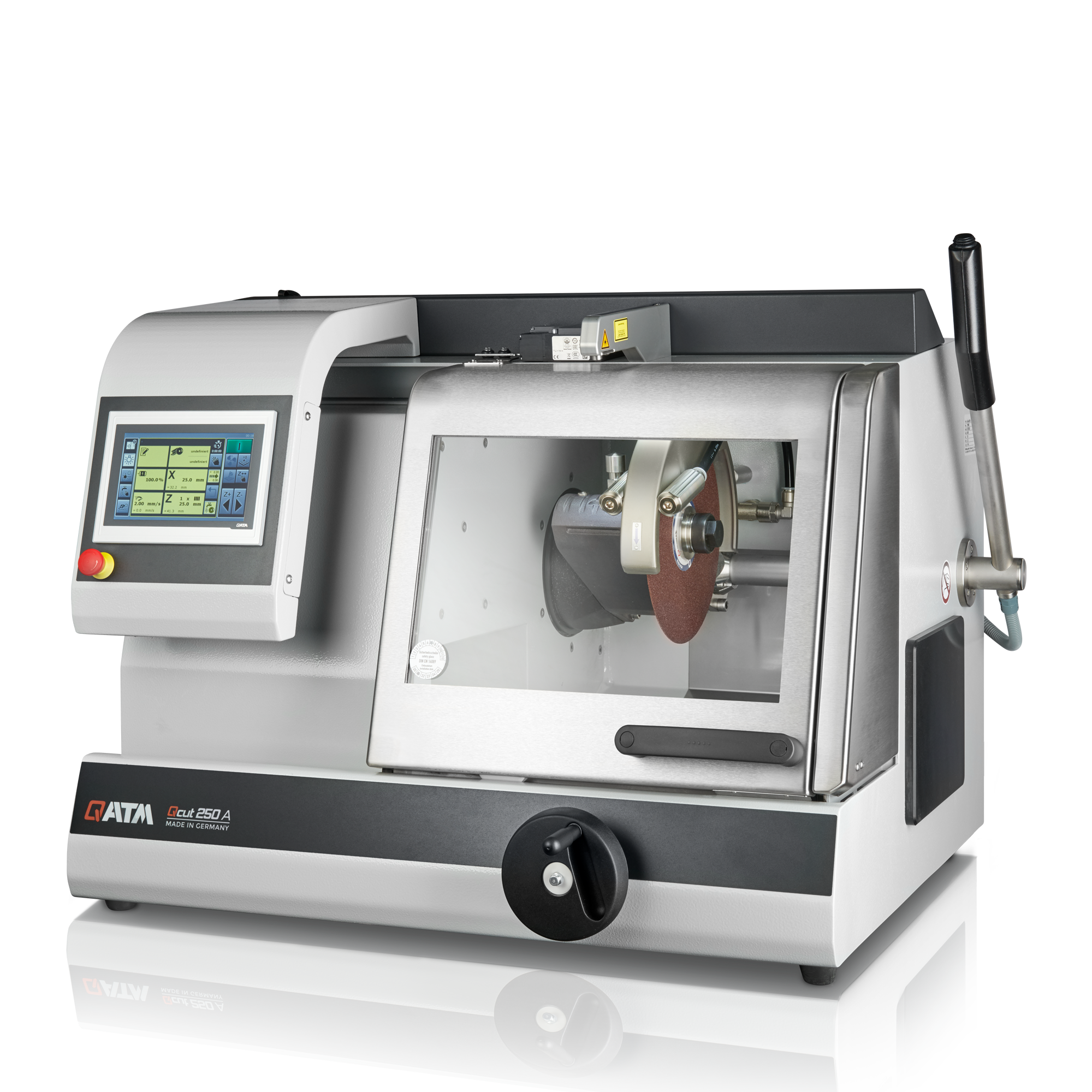
- fast and gentle sectioning of samples
- fast mounting yielding plane surface
- fast and gentle grinding/polishing
Métodos de preparación
método 1
This method has been well established for a long time. Due to the hardness of the heat-treated samples, the lifetime of the SiC Paper is quite short, resulting in relatively high costs for consumable consumption.
The preparation is as follows:
| Paso | Medium | lubricante / suspensión | Velocidad(rpm) | Velocidad(rpm) | Dirección del portamuestras | Carga única(N) |
|---|---|---|---|---|---|---|
| Grinding | SiC, P180 | agua | 300 | sentido horario | 30 | Hasta plano |
| Grinding | SiC, P320 | agua | 300 | sentido horario | 30 | 1:00 |
| Grinding | SiC, P600 | agua | 300 | sentido horario | 30 | 1:00 |
| Grinding | SiC, P1200 | agua | 300 | sentido horario | 30 | 1:00 |
| Pulido | IOTA | Dia complete, 3 | 150 | sentido horario | 30 | 5:00 |
método 2
Planar grinding with a stone offers the advantage of a fast and cost-efficient preparation. But this involves an investment for a special machine. Nevertheless, the overall preparation time is reduced as no SiC papers need to be changed. Additionally, diamond lapping discs can be used, which have a long lifetime.
| Paso | Medium | lubricante / suspensión | Velocidad(rpm) | Velocidad(rpm) | Dirección del portamuestras | Carga única(N) |
|---|---|---|---|---|---|---|
| Grinding | piedra, P100 | agua | fixed | sentido horario | 30 | Hasta plano |
| Pulido previo | Galaxy Contero | Dia complete, 9 μm | 150 | sentido horario | 30 | 4:00 |
| Pulido | IOTA | Dia complete, 3 μm | 150 | sentido horario | 30 | 4:00 |
To avoid the investment for a new machine, diamond grinding discs for planar grinding may be utilized offering the advantage of using standard grinding and polishing equipment.
método 3
The Galaxy grinding disc is very stiff and yields plane surfaces even if the hardness of the sample surface varies.
| Paso | Medium | lubricante / suspensión | Velocidad(rpm) | Velocidad(rpm) | Dirección del portamuestras | Carga única(N) |
|---|---|---|---|---|---|---|
| Grinding | Galaxy red | agua | 300 | sentido horario | 30 | Hasta plano |
| Pulido previo | Galaxy Contero | Dia complete, 9 μm | 150 | sentido horario | 30 | 5:00 |
| Pulido | IOTA | Dia complete, 3 μm | 150 | sentido horario | 30 | 4:00 |
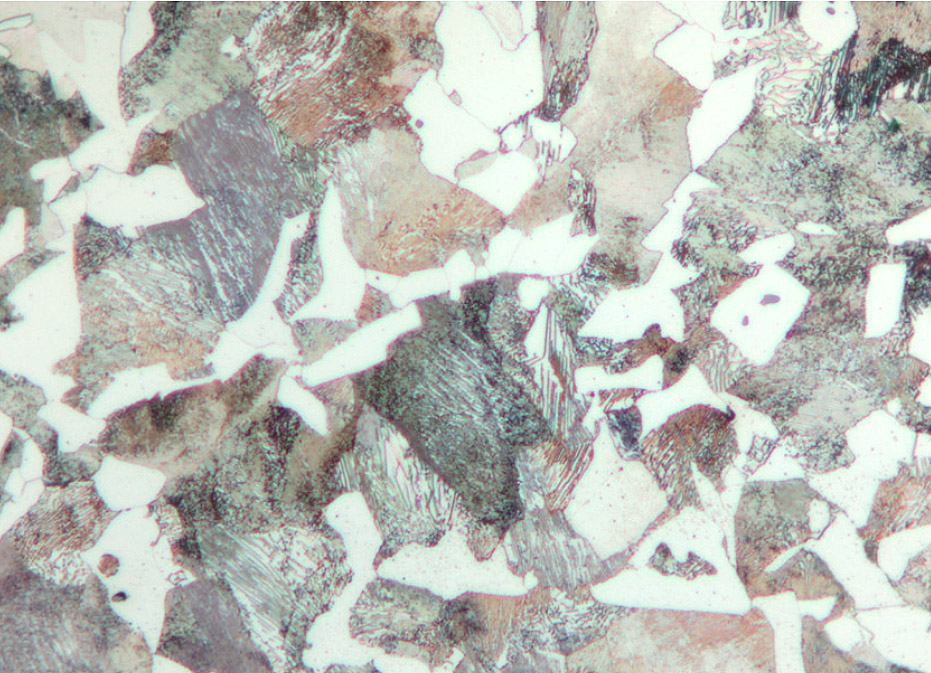
Ferrite-Pearlite, etched with 3% Nital, brightfield 20x

Martensitic structure after heat treatment, etched with 3% Nital, brightfield 20x
Resumen
In hardening shops, the requirements of the samples preparation include short preparation time, high throughput, reliable results with good sample flatness for hardness testing or surface examinations. The preparation method using SiC paper involves relatively high costs, using a grinding stone requires investment in a special machine. The lapping discs method offers the advantage of using existing machines and a long consumables lifetime, providing best cost efficiency and meeting all necessary preparation requirements.
Póngase en contacto con nosotros
QATM ofrece una amplia gama de máquinas innovadoras para el montaje metalográfico, desde robustas prensas de embutición en caliente hasta dispositivos para embutición en frío por irradiación UV. Los consumibles para embutición de QATM que acompañan al producto se prueban y seleccionan de manera exhaustiva para que funcionen a la perfección con nuestras máquinas. Póngase en contacto con nosotros para hacernos una consulta, solicitar un presupuesto o hablar con uno de nuestros especialistas en aplicaciones.