






QATM, azienda leader nella produzione di strumenti per la metallografia, propone diversi modelli di pressa inglobatrice a caldo per garantire un ottimo inglobamento.
Tutte le presse inglobatrici sono completamente idrauliche con raffreddamento ad acqua. Ulteriormente, per poter inglobare campioni di differente forma e dimensione, possiedono a catalogo un’ampia varietà di cilindri di inglobamento di diversa dimensione e forma (tondi o rettangolari).
È possibile inglobare fino a 2 campioni per volta grazie semplicemente aggiungendo uno spaziatore all’interno del cilindro. Infine, grazie all’innovativo sistema di chiusura delle presse inglobatrici QATM viene garantito, allo stesso tempo, facilità di utilizzo ed affidabilità.
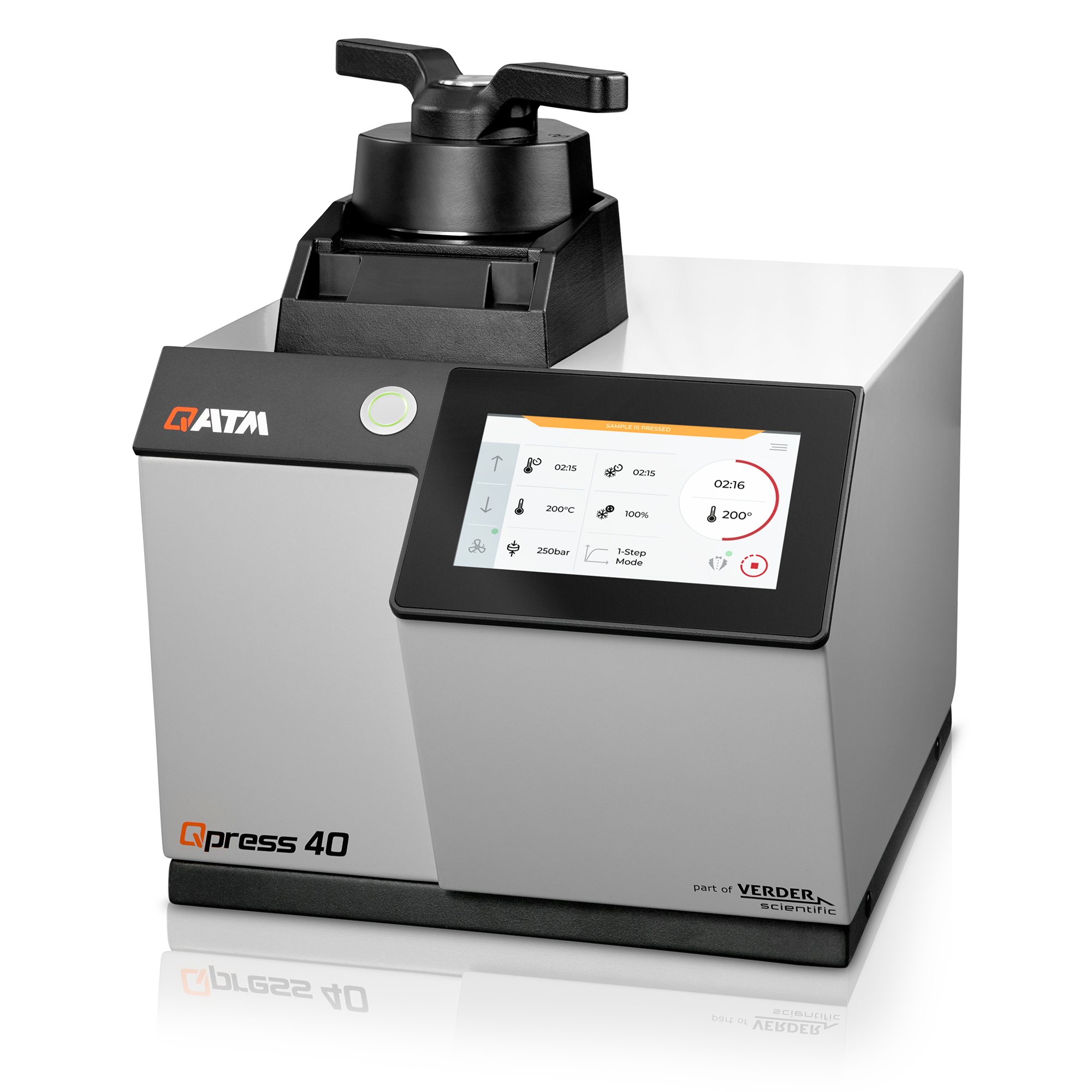
- Cilindri di inglobamento: ø 25.2 - 40 mm (6 dimensioni differenti)
- Sistema di chiusura: Baionett
- Possibilità di inglobamento doppio: Regolazione del punto zero
- Innovativa concezione modulare
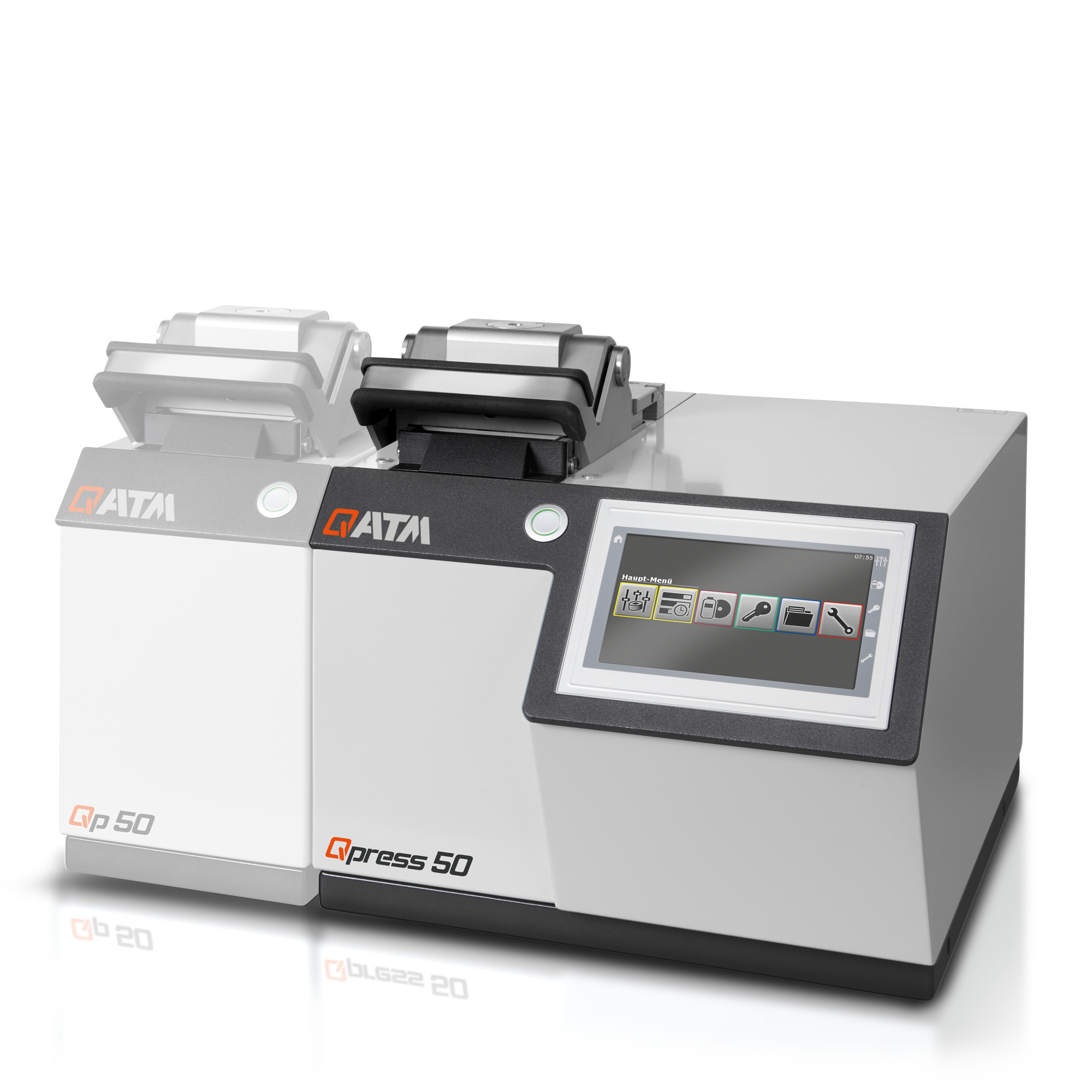
- Numero massimo di unità d'inglobamento aggiuntive: 2/4|Qpress 50-2: fino a 2|Qpress 50-4: fino a 4
- Cilindro d'inglobamento: Ø 25,2 - 50 mm (6 misure diverse)
- Sistema di chiusura: Chiusura scorrevole
Contesto informativo Inglobamento a caldo
Hot Mounting Presses for Reliable Sample Preparation
A hot mounting press is a device used in metallographic and materialographic sample preparation to embed a specimen in a stable, standardized mount before grinding, polishing, and microscopic examination. By applying controlled heat and pressure, a hot mounting press forms a compact mount that is easy to handle, align, and process throughout the preparation workflow. Most systems are fully hydraulic and water-cooled, which supports consistent results from one sample to the next.
Stable Sample Mounting for Reproducible Results
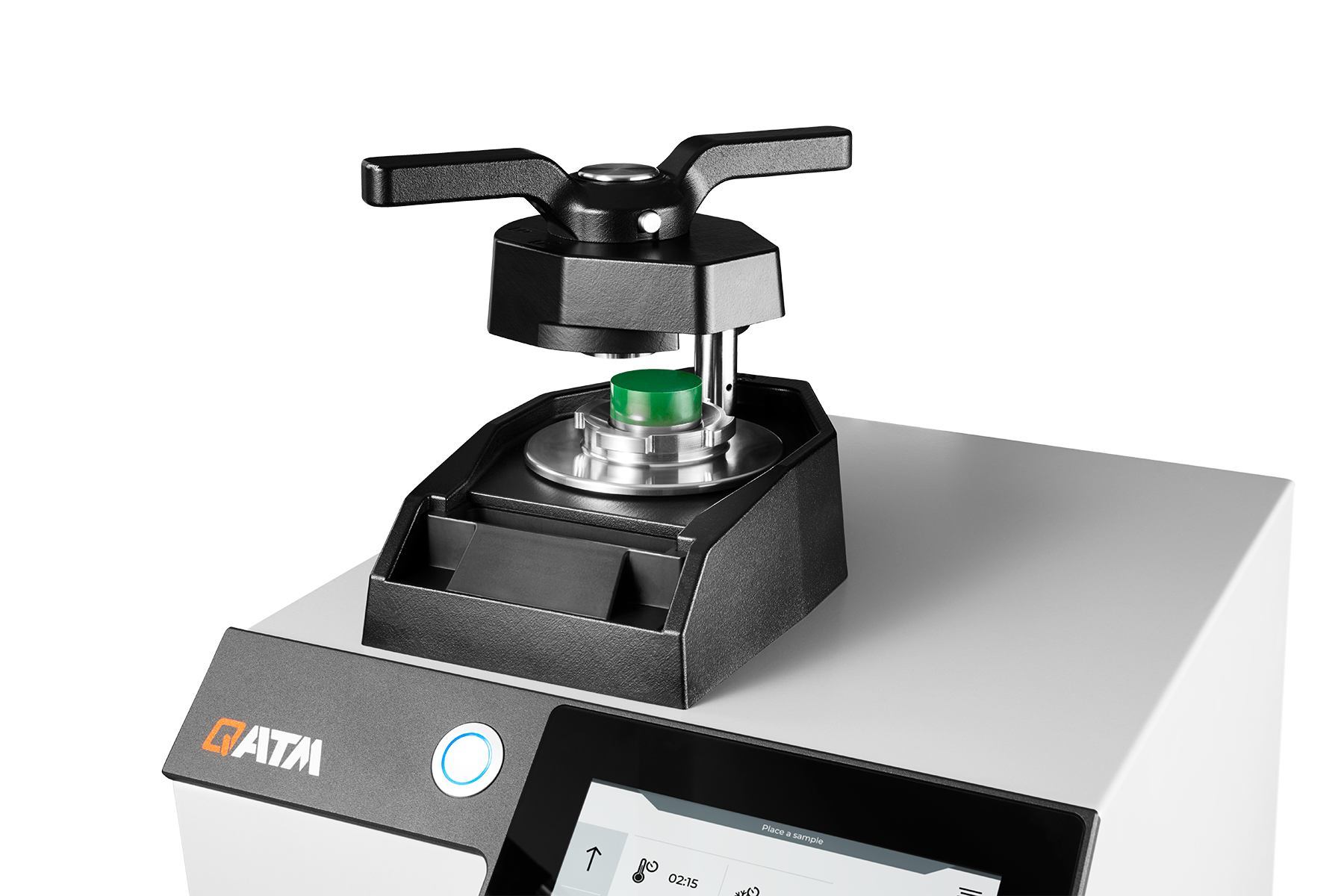
Hot mounting supports accurate sample mounting by fixing the specimen securely in a defined shape and size. This improves handling, enables reproducible preparation steps, and reduces the risk of sample movement during grinding or polishing. When preparation parameters and mounting materials are matched to the specimen, a stable mount also contributes to minimal deformation of sensitive samples.
Edge Retention for Critical Surface Areas
A key advantage of hot mounting is excellent edge retention. This is particularly important when examining coatings, surface layers, case-hardened zones, or interfaces, where the outer edge of the specimen must remain clearly visible and fully supported during preparation.
Controlled Pressure and Consistent Mount Quality
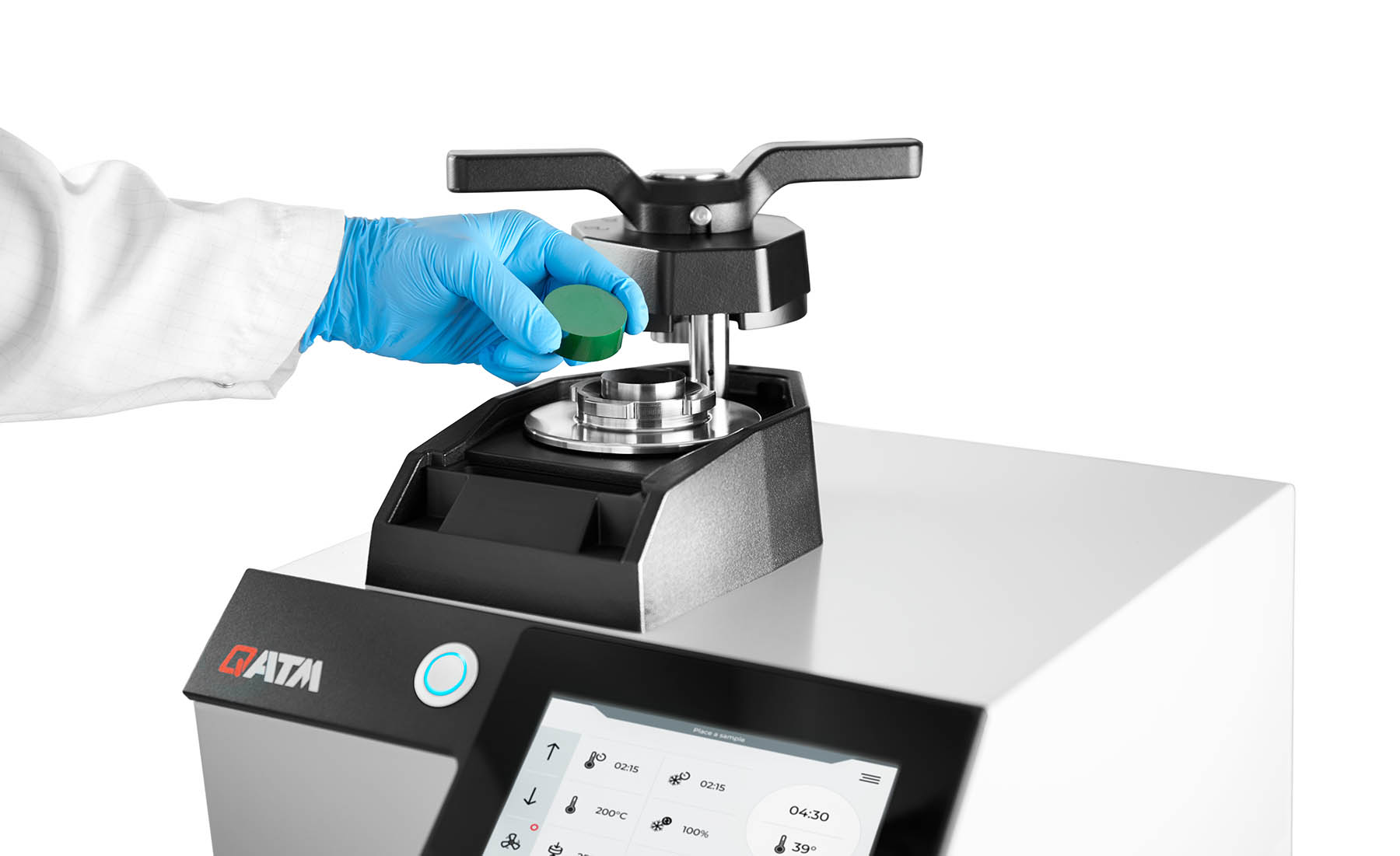
A hydraulic mounting press provides precise, repeatable pressure throughout the mounting cycle. Combined with controlled heating and water cooling, this supports consistent mount quality from sample to sample. A suitable mould assembly positions the specimen correctly and ensures that the mounting compound forms a uniform, durable mount. Mould cylinders are available in different sizes for round mounts.
Applications in Metallography and Materialography
Hot mounting presses are used in quality control, research, production monitoring, and failure analysis. They are especially suitable when laboratories require standardized mounts, reproducible preparation conditions, and high-quality surfaces for subsequent microscopic evaluation.
Inglobamento a caldo - FAQ
What is a hot mounting press used for?
A hot mounting press is used to embed metallographic or materialographic samples in a stable mount before grinding, polishing, and analysis. It improves handling and helps ensure consistent preparation results.
What are the advantages of hot mounting?
Hot mounting offers high reproducibility, good dimensional stability, and excellent edge retention. It is especially useful when samples must be prepared in a standardized format.
Why is edge retention important in sample mounting?
Edge retention preserves surface layers, coatings, and material interfaces during preparation. This allows more accurate examination of critical areas near the sample edge.