






Aerospace Metallography How metallography helps advance cutting-edge aerospace materials
Aerospace metallography plays a vital role in the development, quality assurance, and performance evaluation of modern aerospace materials. From aircraft engines and structural components to thermal protection systems, aerospace applications depend on materials that must withstand extreme mechanical and environmental stress. Materials such as nickel-base alloys, titanium, aluminum, fibre-reinforced plastics (CFRP/GFRP) and advanced coating systems are chosen for their specific performance characteristics, but their suitability cannot be determined by chemical composition alone.
To understand how these materials perform in service, engineers and scientists must examine their microstructure in detail. Grain boundaries, phase distribution, porosity, inclusions, cracks, deformation zones, and coating integrity all provide valuable insight into a material’s properties and long-term reliability. Metallography makes these features visible and measurable, helping to determine whether a component can meet the demanding requirements of aerospace applications.
In practice, aerospace metallography supports both research and routine production control. It helps laboratories assess process consistency, compare material batches, evaluate heat treatment, analyse coating quality, and investigate defects or premature failure. As aerospace materials continue to evolve, metallographic analysis remains essential for linking manufacturing processes with material performance and ensuring the reliability of critical components.
Discover how QATM supports the advancement of cutting-edge materials for aerospace applications.
Why aerospace metallography matters
The aerospace industry continuously pushes materials to do more: higher turbine efficiency, lower structural weight, better fatigue resistance, higher temperature capability, and improved reliability under extreme environmental conditions. These goals drive the use of advanced nickel-base superalloys in hot sections, Thermal Barrier Coating systems on critical engine parts, titanium in high-strength lightweight applications, and aluminium in structural and weight-sensitive designs. Each material class brings specific microstructural questions, and each one requires a preparation route that preserves the true structure instead of introducing grinding, polishing, or sectioning artifacts
Metallography of nickel-base alloys for aerospace
Nickel-base alloys are among the most important materials in aerospace, especially for turbine discs, blades, vanes, combustor parts, and other hot-section components. Their importance lies in their ability to retain strength at high temperatures while resisting creep, oxidation, and mechanical damage. In metallography, the aim is to reveal key microstructural features such as grain size, grain-boundary condition, precipitate distribution, carbides, service-related damage, and cracks or oxidation-affected regions. Because these features are directly linked to component performance and service life, consistent sample preparation is essential. Preparation of nickel-base alloys must be adapted carefully to the material. Sectioning should minimise thermal impact to avoid altering the microstructure. For nickel-base alloys, a rubber-bonded corundum cut-off wheel such as Type A brown is recommended. Mounting can be done using either hot or cold mounting methods. Hot mounting offers very low gap formation and high edge retention, with EPO black and EPO-Max as suitable options. For cold mounting, KEM 15 plus is recommended due to its low shrinkage and high edge retention. Polishing must produce a flat, scratch-free surface while preserving fine details. A detailed preparation method, including polishing cloths, machine parameters, and further recommended consumables, is available in the QATM application note on nickel-base alloys.

Metallography of thermal barrier coatings (TBCs) and thermal spray coatings for aerospace
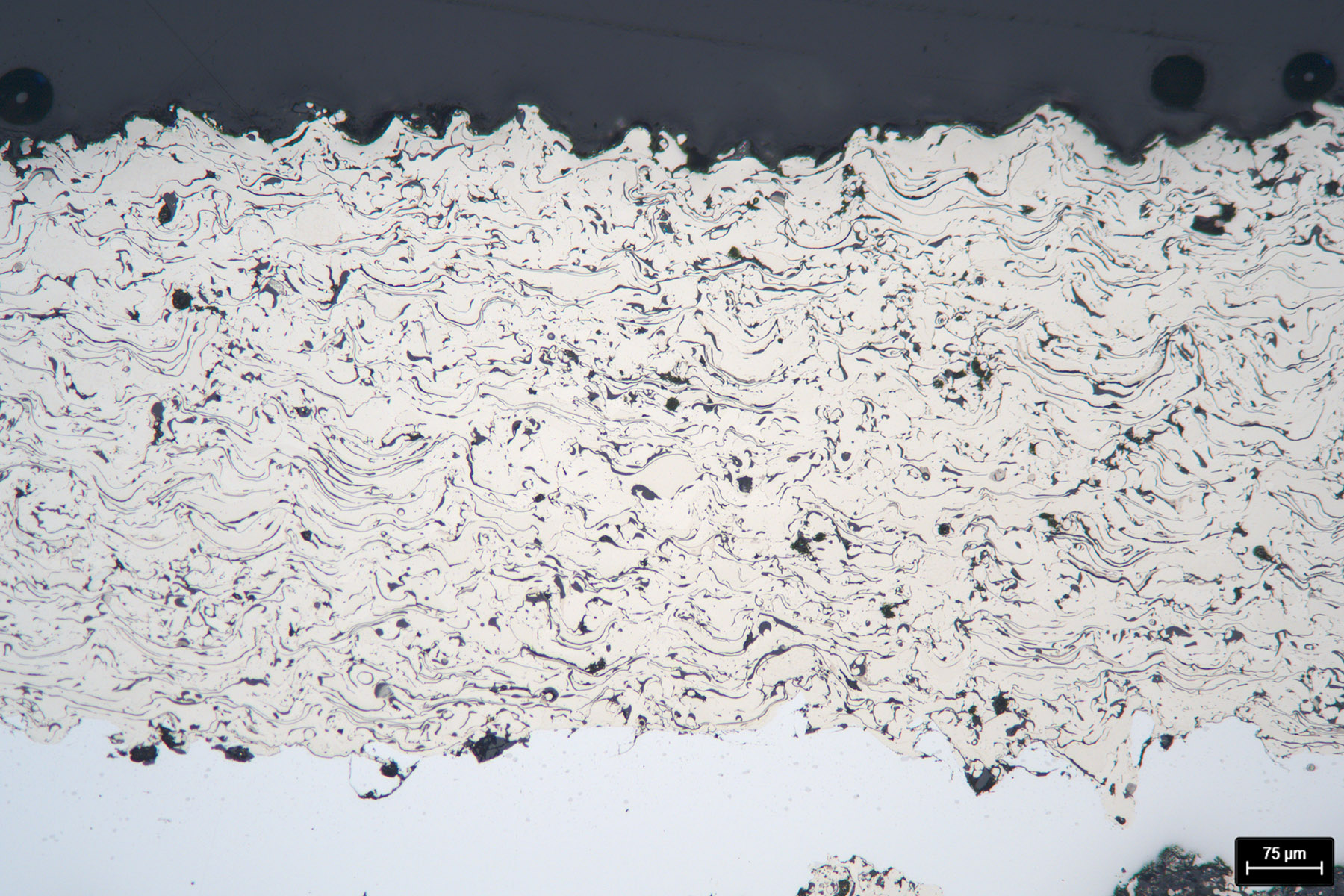
Thermal Barrier Coating systems are among the most preparation-sensitive features in aerospace metallography. They are used to protect hot-section components and typically consist of a metallic substrate, a bond coat, and a ceramic top coat. When preparing a coating cross-section, the goal is not only to make the coating visible, but to preserve the true microstructure for reliable analysis. This includes evaluating coating thickness, porosity, crack networks, splat morphology where relevant, interface quality, and the thermally grown oxide layer. The metallographic preparation of thermal spray coatings is particularly challenging and requires adapted parameters and consumables. If preparation is too aggressive, the coating may suffer from pull-out, edge loss, artificial cracking, or rounded interfaces, all of which can distort the actual structure. To avoid this, sectioning should be carried out with a diamond precision cut-off wheel to minimise damage to the coating system. Cold mounting is generally recommended, using an epoxy resin with low viscosity to ensure good infiltration and excellent edge retention. QPox 90 is a suitable choice due to its low viscosity and very low gap formation, while QPox 93 offers a CMR-free alternative. Grinding and polishing must also be carefully adapted to avoid damaging the coating layers. A typical preparation route includes planar grinding with SiC paper followed by several polishing steps using tailored machine parameters and consumables. A detailed preparation method can be found in the corresponding QATM application note.

Metallography of titanium and titanium alloys for aerospace
Titanium and titanium alloys are key materials in aerospace because they combine low density with high strength, good corrosion resistance, and excellent performance in demanding environments. They are widely used in airframe structures, engine components, and other flight-critical parts where weight reduction and mechanical reliability are essential. In metallography, titanium is typically examined to assess grain structure, alpha/beta morphology, inclusions, deformation and heat treatment. These microstructural features are important for understanding how titanium components will perform in service and whether manufacturing processes have produced the desired material condition. From a preparation point of view, titanium requires a careful and controlled approach. Because the material is relatively ductile and sensitive to mechanical deformation, improper sectioning or polishing can easily alter the surface and obscure the true microstructure. Sectioning should therefore be carried out with a suitable cut-off wheel, typically a SiC-based resin-bonded wheel, to minimise heat generation and surface damage. Grinding and polishing must also be adapted to avoid smearing and deformation, often requiring relatively gentle parameters and longer polishing times to achieve a clean, undistorted surface. For more detailed information on titanium preparation methods, consumables, and typical microstructures, please visit our dedicated Titanium Metallography page.
Metallography of aluminum for aerospace
Aluminum and aluminum alloys play an important role in aerospace wherever low weight, good formability, and efficient structural performance are required. They are widely used in aircraft structures and other lightweight components, where reducing mass without compromising reliability is essential. In metallography, aluminum is typically examined to assess grain structure, segregation effects, inclusions, deformation, processing quality, and the influence of heat treatment. These features help manufacturers evaluate material quality and confirm that components meet the demands of aerospace applications. From a preparation point of view, aluminum requires a careful approach because of its soft and ductile nature. The main challenge is to avoid smearing, embedded abrasives, and preparation-induced surface deformation that can mask the true microstructure. Sectioning is therefore typically carried out with a SiC cut-off wheel, followed by grinding with SiC paper to a fine grit size such as P1200 or finer. Polishing with diamond suspension is then used to prepare a clean surface and reveal the microstructure for reliable analysis. For more detailed information on aluminum preparation methods, consumables, and typical microstructures, please visit our dedicated aluminum metallography website.
Metallography of fibre-reinforced plastics (CFRP and GFRP) for aerospace
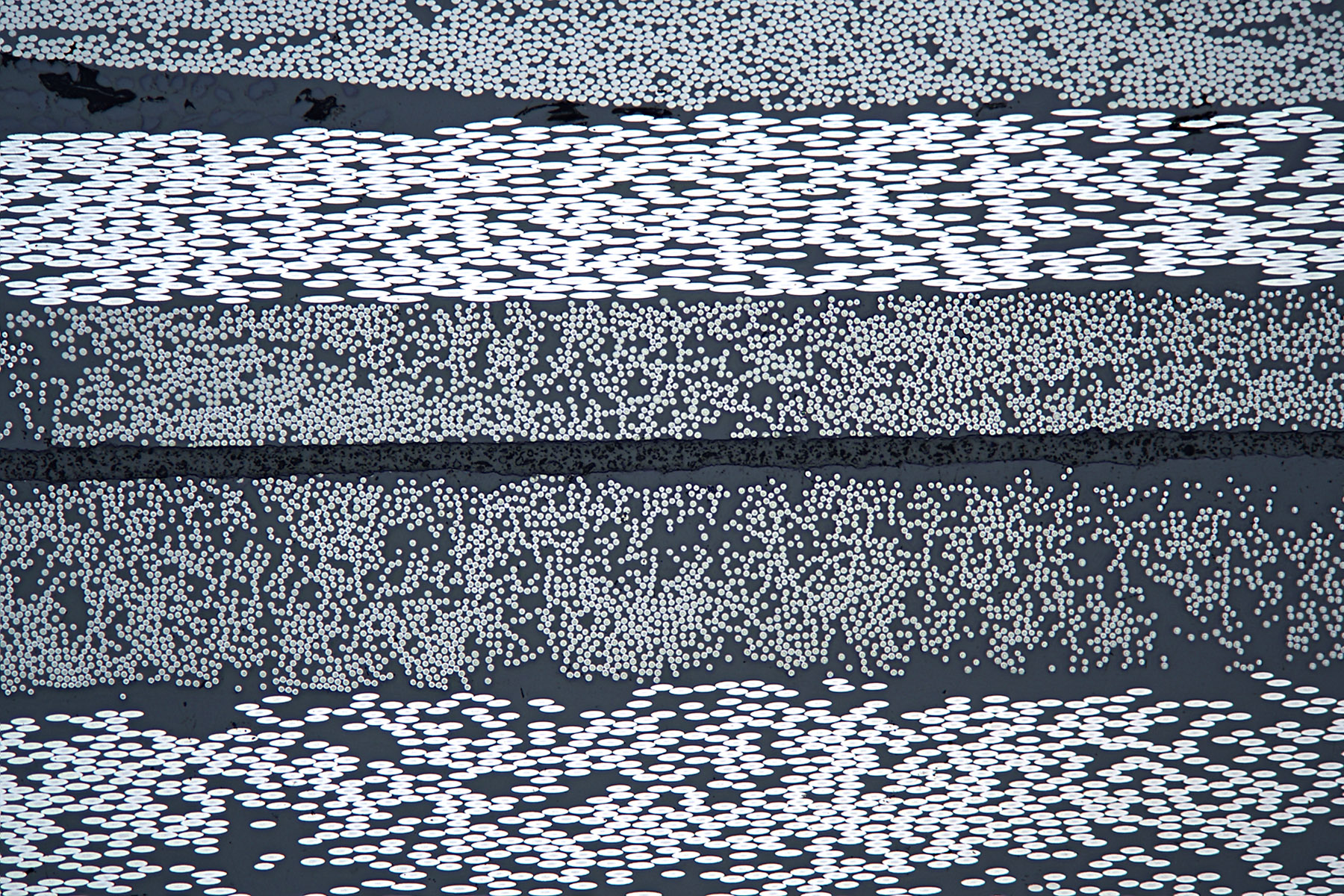
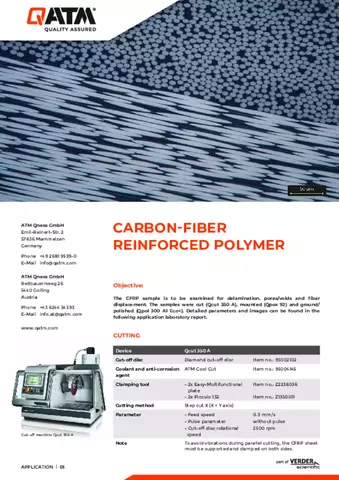
Carbon-fibre reinforced plastics (CFRP) and glass-fibre reinforced plastics (GFRP) are well established materials in aerospace. They are used wherever low weight, high specific strength, corrosion resistance, and design flexibility are required. In modern aircrafts, especially in primary and secondary structures, composite materials help reduce weight, improve efficiency, and support long-term structural performance. Airbus, for example, highlights the extensive use of CFRP in aircraft structures such as the fuselage, wings, and tail. The metallographic preparation of fibre-reinforced plastics requires a careful and material-specific approach. Because the polymer matrix is sensitive to heat and mechanical damage, preparation must preserve both the fibres and the fibre-matrix interface. This is particularly important when evaluating defects such as delamination, pores or voids, and fibre displacement. Sectioning of fibre-reinforced plastics should therefore be carried out with a bronze-bonded diamond cut-off wheel. Due to the temperature sensitivity of CFRP and GFRP, cold mounting or UV mounting is generally preferred. We recommend using an epoxy resin such as QPox 92, which offers good infiltration and a low peak curing temperature to help maintain the integrity of the polymer matrix. Grinding is typically performed with SiC paper, followed by polishing with diamond suspension. The complete preparation route can be accessed here:
Reliable aerospace metallography with QATM
From nickel-base alloys and Thermal Barrier Coatings to titanium, aluminum, and fibre-reinforced plastics, aerospace metallography requires carefully adapted preparation methods and reliable analysis. QATM supports laboratories with tailored equipment, consumables, and application expertise for demanding aerospace materials.

Need more information?
If you have any further inquiries, don’t hesitate to reach out via our contact form. We’re always happy to assist you in finding the best solution for your metallographic sample preparation needs.
Aerospace Metallography - FAQ
What is aerospace metallography and why is it important?
Aerospace metallography is the microscopic analysis of materials used in aerospace applications. It is important because it reveals microstructural features such as grain boundaries, porosity, cracks, inclusions, and coating integrity, helping manufacturers evaluate material quality, process consistency, and component reliability.
Which materials are commonly analysed in aerospace metallography?
Aerospace metallography commonly focuses on nickel-base alloys, titanium, aluminum, thermal barrier coatings (TBCs), thermal spray coatings, and fibre-reinforced plastics such as CFRP and GFRP. These materials are used in aircraft engines, structural components, and lightweight aerospace designs.
How are thermal barrier coatings (TBCs) examined in metallographic analysis?
In metallographic analysis, Thermal Barrier Coatings are typically examined in cross-section. The analysis focuses on coating thickness, porosity, crack formation, interface quality, splat morphology, and the thermally grown oxide layer. Careful preparation is essential to preserve the true coating structure.
What are the main challenges in preparing titanium and aluminum for metallography?
Titanium and aluminum require careful preparation because both materials are prone to plastic deformation. To reveal the true microstructure, the preparation method must be adapted to the material and supported by suitable consumables. Controlled sectioning, grinding, and carefully selected polishing methods are essential. More detailed preparation information can be found on the corresponding application pages for titanium and aluminium.